
Classical Pilates is not a style of exercise — it is a complete method, built by one man over a lifetime, taught in an exact order, on apparatus he designed himself. This page is the system, explained.
"In 10 sessions you will feel the difference, in 20 you will see the difference, and in 30 you will have a whole new body."
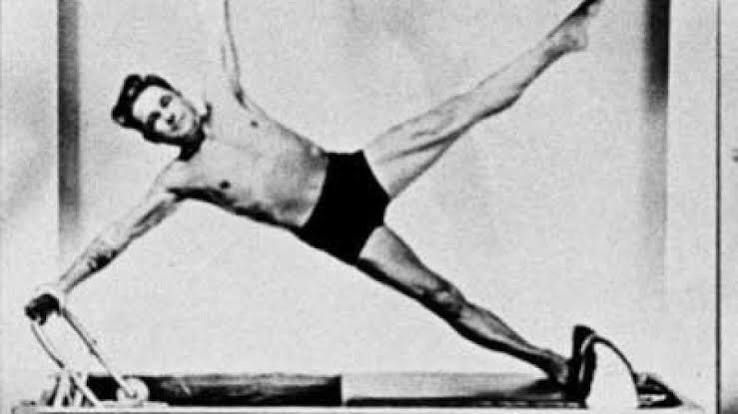
Born in Mönchengladbach, Germany — a sickly child who rebuilt his own body through gymnastics, boxing, and study of movement.
Interned on the Isle of Man during the First World War, he trains fellow internees — and rigs hospital beds with springs so the injured can exercise lying down. The Cadillac is born.
Opens his New York studio on Eighth Avenue with his wife Clara. Dancers, athletes, and society flock to what he calls Contrology.
Publishes Return to Life Through Contrology — the complete mat sequence, in his own words.
Dies in New York. His first-generation students — the Elders — carry the work forward, teacher to teacher. That chain is the lineage this studio is named for.
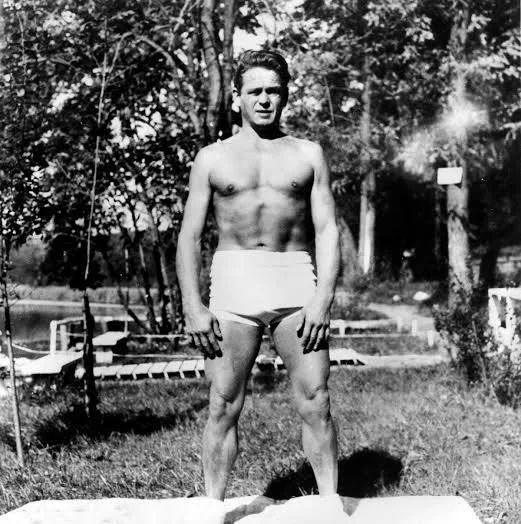
Every exercise in the system, on every apparatus, is governed by the same six ideas.
Every movement begins from the powerhouse — the deep centre of the body — and radiates outward.
The mind directs the body. Full attention on each movement is what separates exercise from Contrology.
No movement is thrown or dropped. The body works against the springs, and against habit, with intention.
Where, how, and exactly how much — the details are not decoration. They are the method.
Full inhalation, complete exhalation — breath drives the rhythm and cleanses the body, as Joe insisted.
Exercises link in a set order, each preparing the next, until the whole session moves as one piece.
Joe built each apparatus to teach the body something the others cannot. Together they are one gym — his gym.
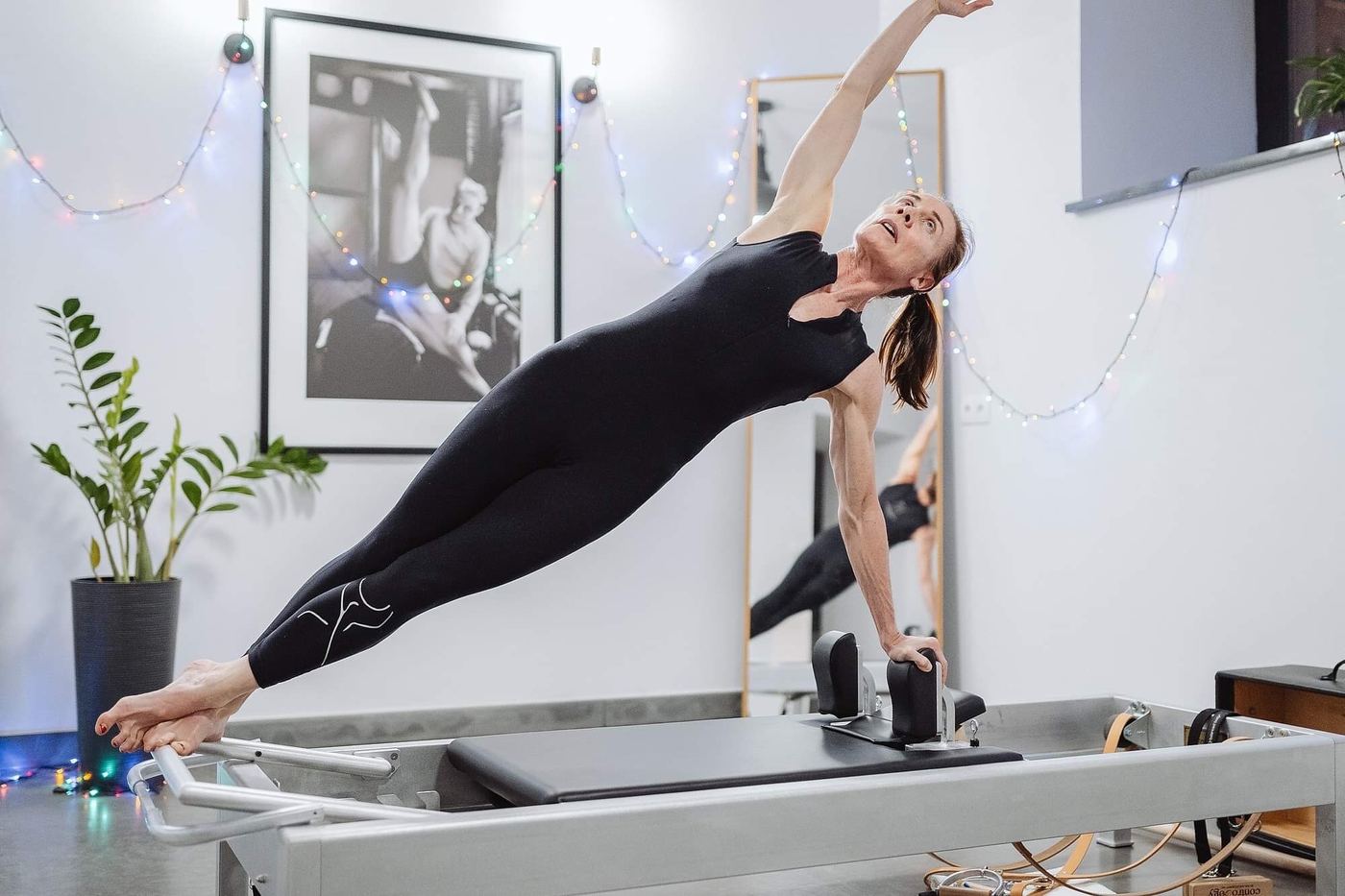
The moving carriage, sprung with resistance — the heart of the equipment work.
A gliding carriage, springs, straps, and a foot bar. The Reformer teaches the body to move from its centre against intelligent resistance — every push and pull recorded honestly by the springs.
Best for: building uniform strength, control, and the foundations of the whole system.
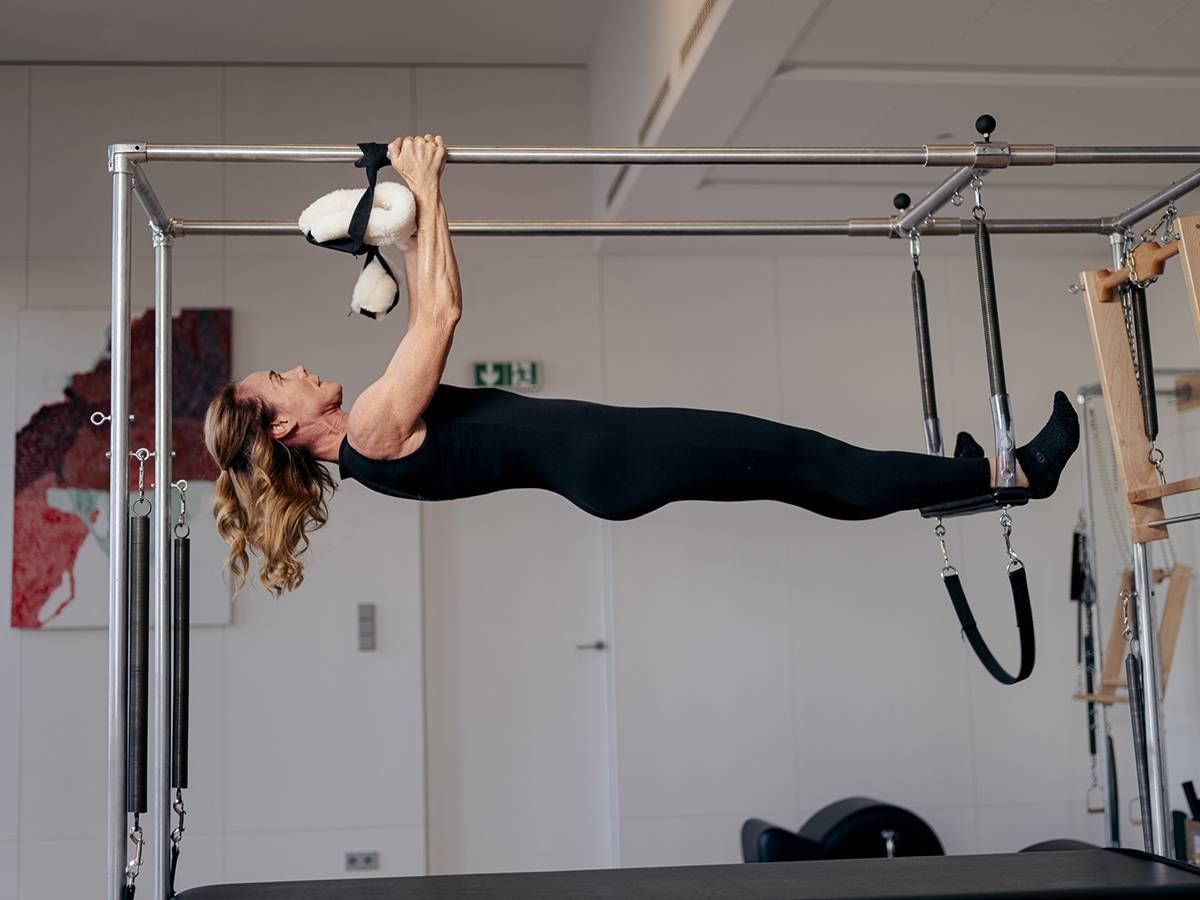
The trapeze table — born from hospital beds Joe rigged with springs.
A raised table beneath a four-post frame hung with springs, bars, and the trapeze. The Cadillac isolates and supports: it can gently open a stiff spine or demand full-body strength hanging in the air.
Best for: precise spring work, spine articulation, and advanced hanging repertoire.
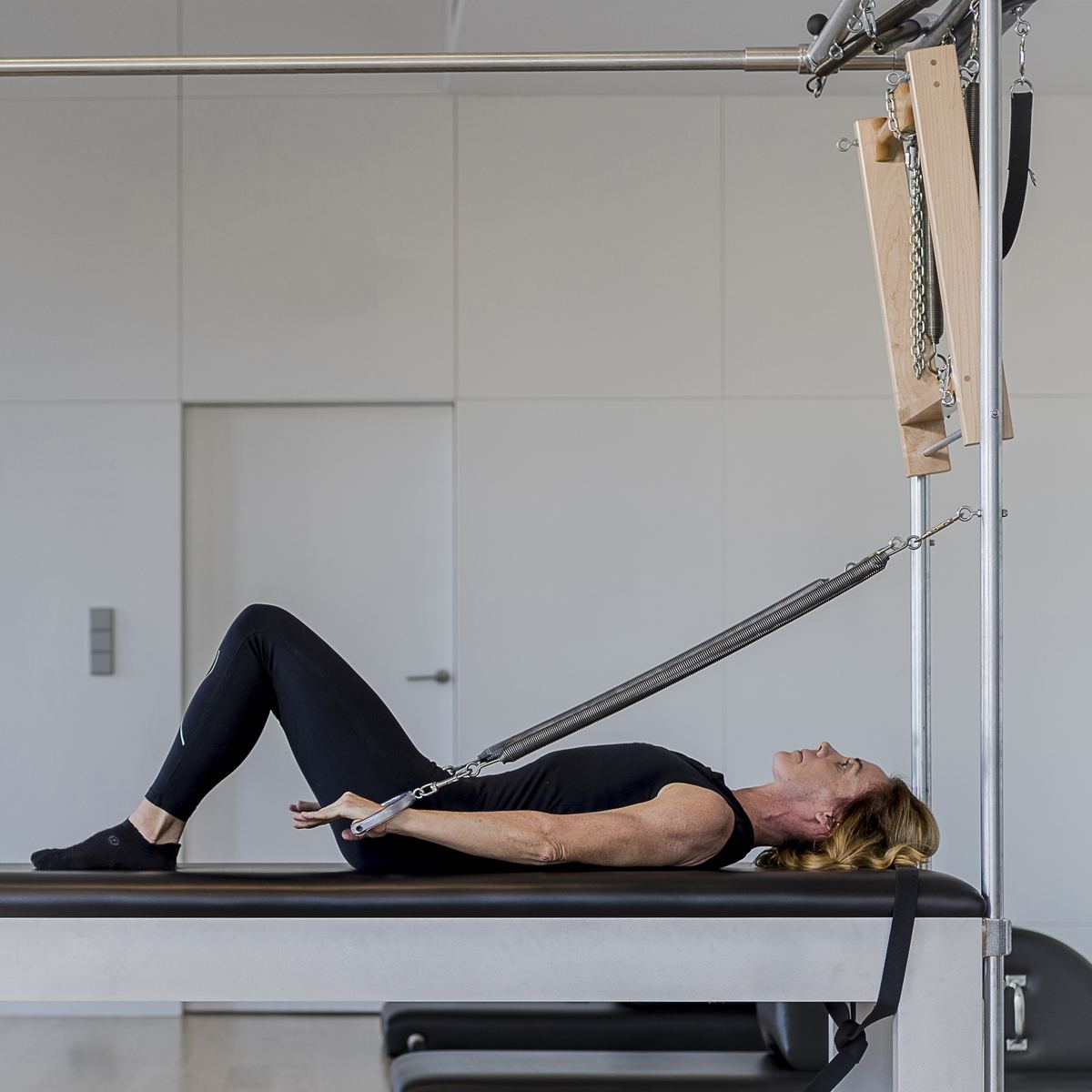
The wall unit — the Cadillac’s vertical half, one body at a time.
A vertical frame with push-through bar, roll-back bar, and leg springs above a mat. The Tower channels the Cadillac’s spring work into a compact station — resistance above, stability below.
Best for: push-through work, leg springs, and controlled articulation of the spine.
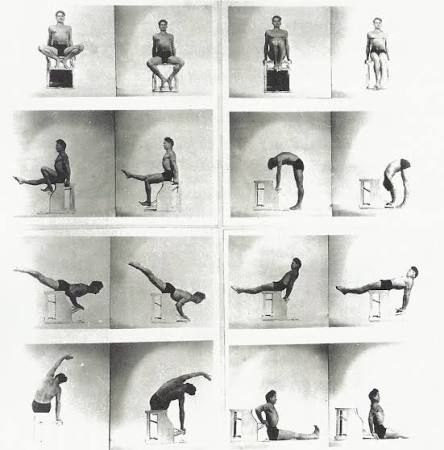 Joe demonstrating — archival
Joe’s furniture piece — a chair that becomes a gym.
A box with a sprung pedal. Deceptively simple and famously demanding: with so little to lean on, the Chair asks the centre to do everything — balance, press, and control in a small footprint.
Best for: single-leg strength, balance, and honest core control.
Rungs on one side, a barrel on the other — the spine’s sculptor.
A curved barrel joined to ladder rungs. The body drapes, extends, and side-bends over the arc while the legs anchor on the ladder — opening the front body and strengthening the back.
Best for: backbends, side bends, and deep, supported stretch.
The step barrel — a portable arc for the spine.
A small barrel with a step. It supports the spine’s natural curves so the body can extend over it safely — restoring the bend modern chairs take away.
Best for: opening the chest and shoulders and mobilising the mid-back.
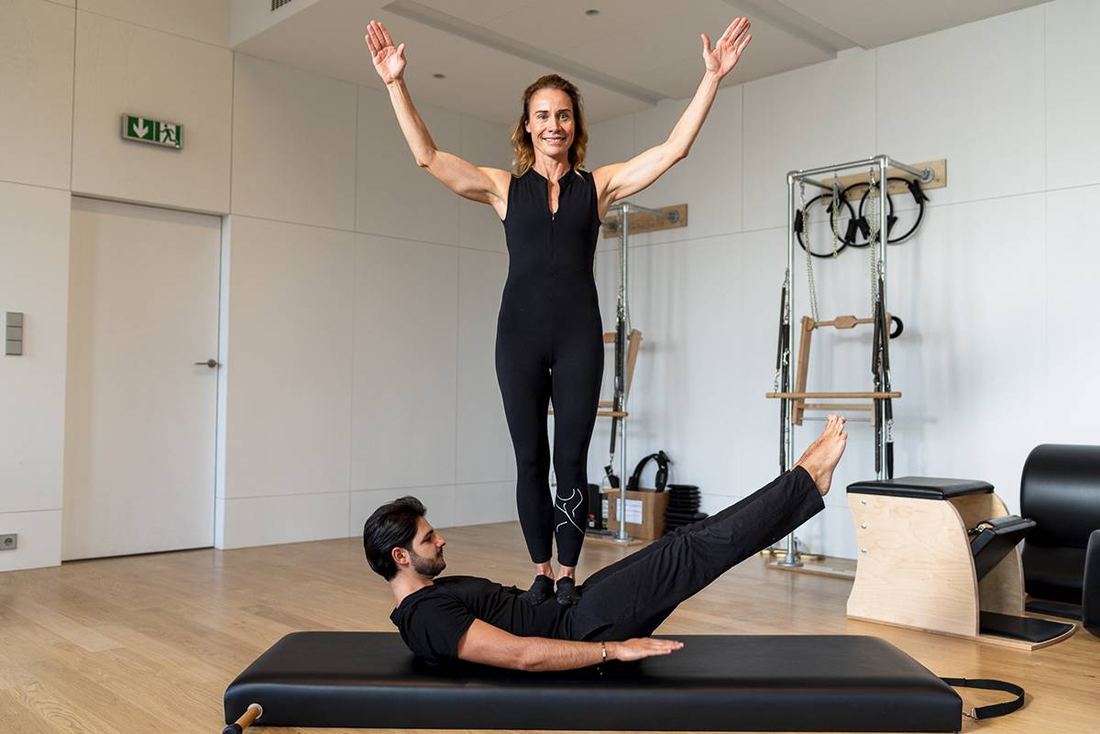
Where the method begins and ends — the work with no help at all.
The original sequence from Return to Life: the body on a mat, moving through the classical order with nothing but its own control. Everything the apparatus teaches returns here.
Best for: the daily practice — the system distilled to the body alone.
Reformer Pilates in Budapest — how our teaching differs
Reading about the Reformer is one thing. Feeling the springs answer you is another. Book an intro private — or your first small group session — and work the system hands-on.